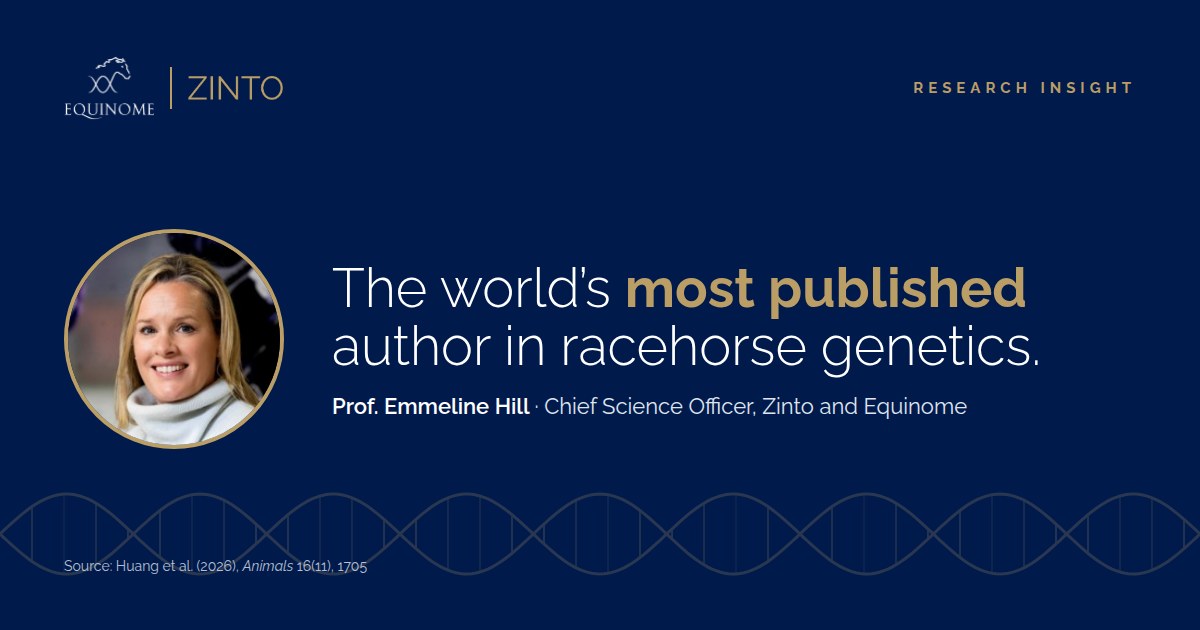
Our Chief Science Officer, Emmeline Hill, is the world’s most published author in racehorse genetics.
A new study in Animals has mapped 15 years of racehorse genetics research. It covers 869 papers published from 2011 to 2025.
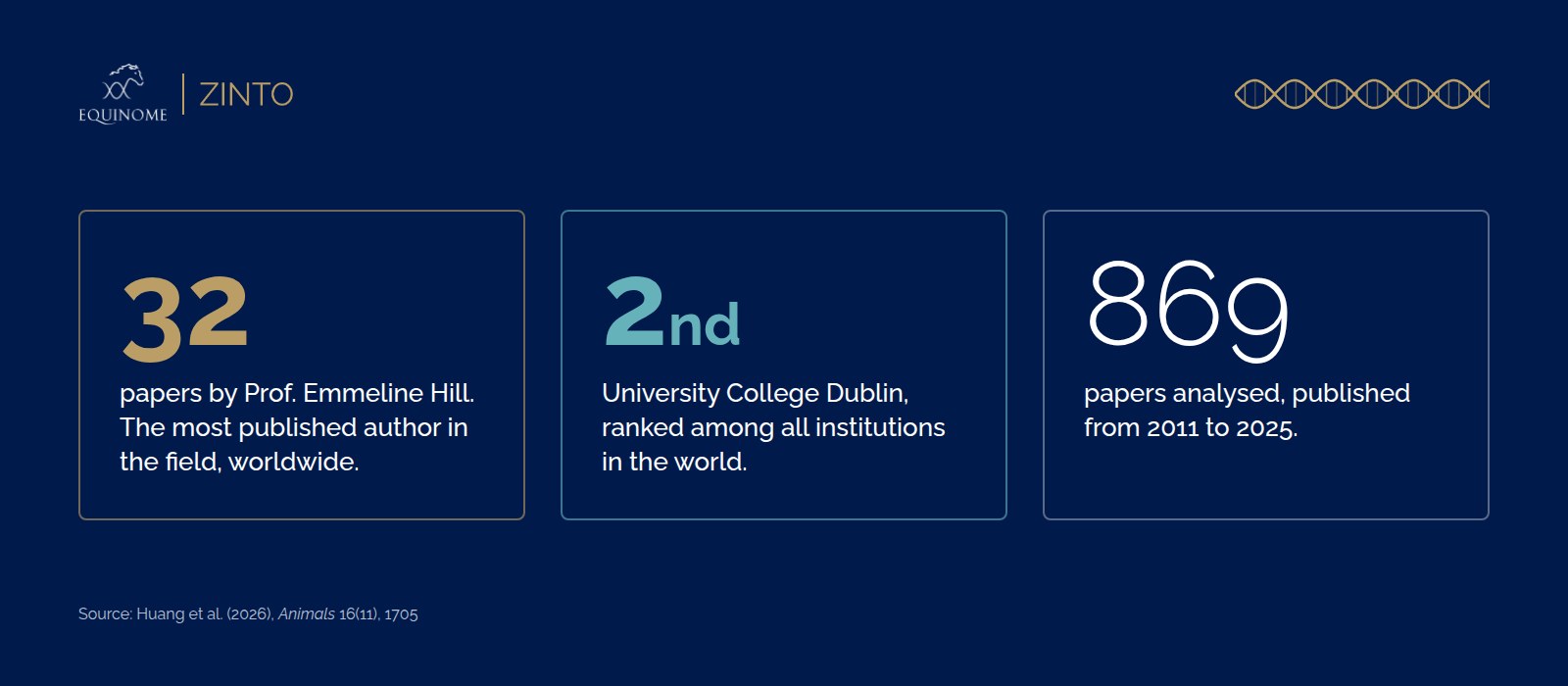
The study identifies Emmeline’s 2010 research on exercise-related genes as foundational to the discipline.
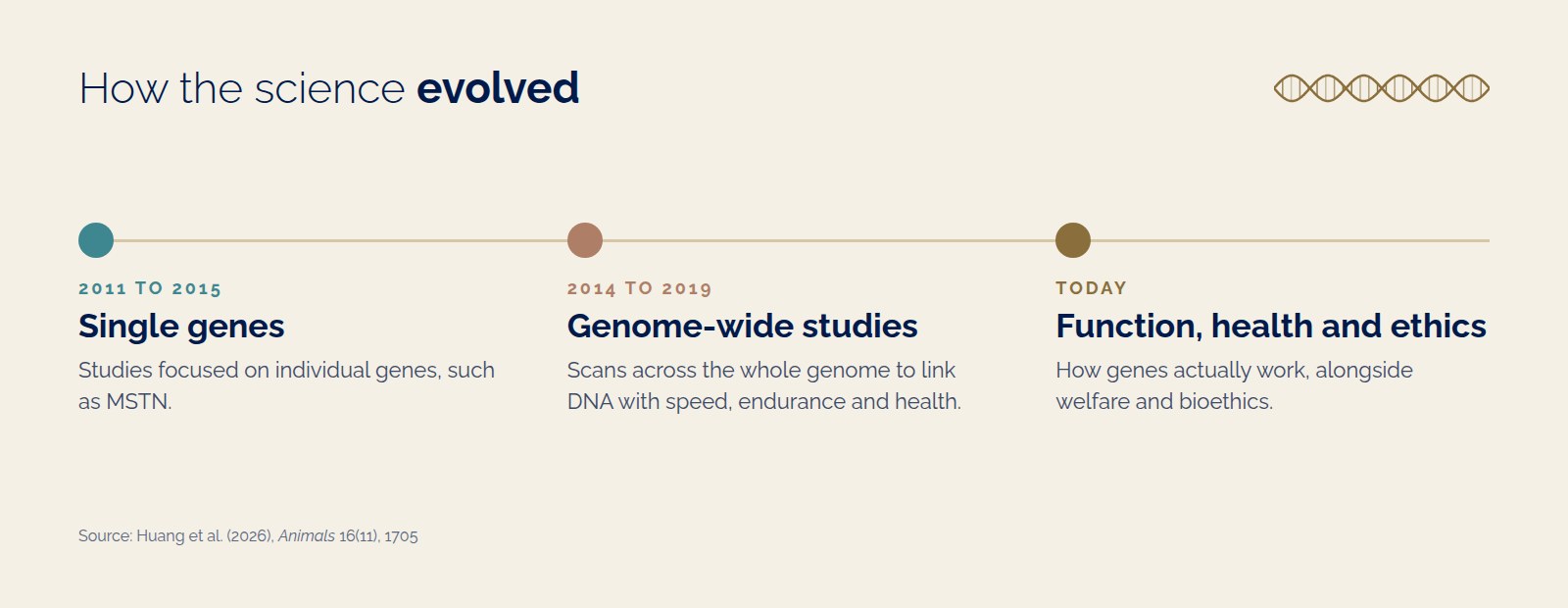
Racehorse genetics has moved through three clear phases.
Why inbreeding matters
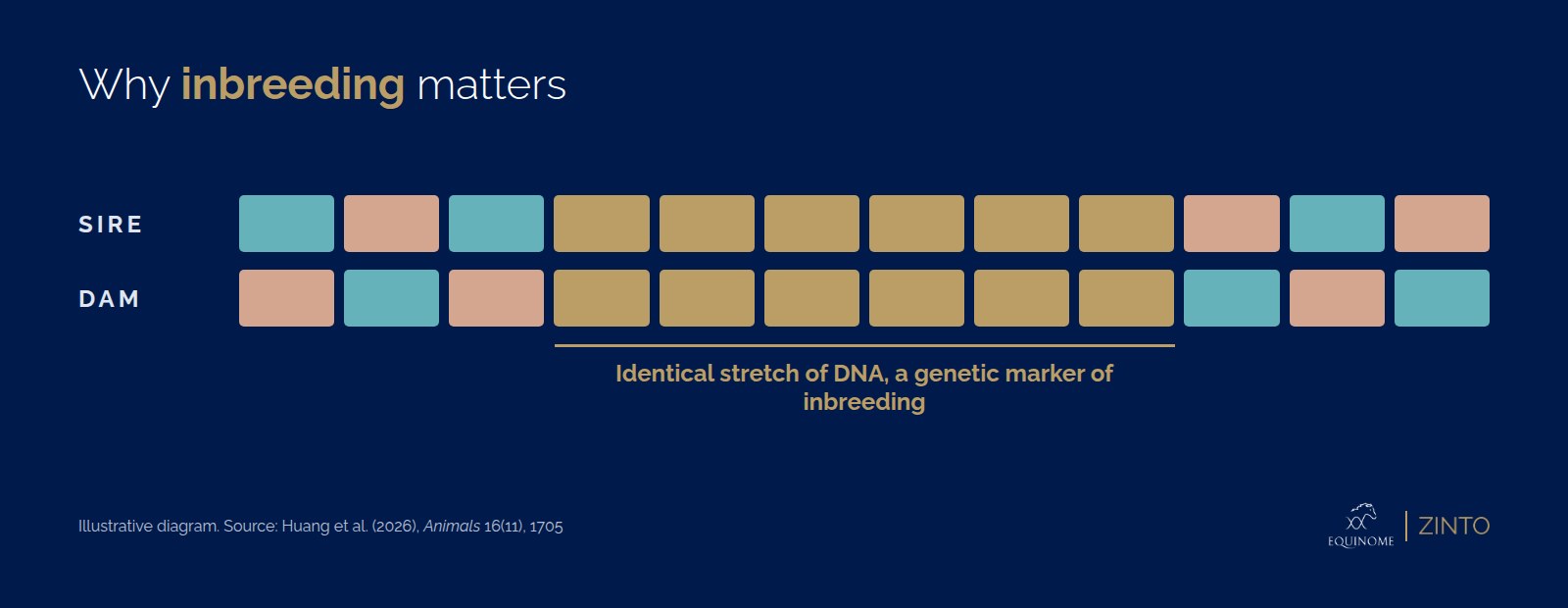
Every horse inherits two copies of each gene, one from each parent. When parents are closely related, those copies are more likely to be identical.
Long identical stretches of DNA are a genetic marker of inbreeding. They have been linked to shorter racing careers and reduced fertility.
Genomic tools can help breeders manage inbreeding while still breeding for performance.
Source: Huang et al. (2026). Research Trends and Emerging Frontiers in Racehorse Genetics: A Bibliometric Analysis. Animals 16(11), 1705. doi.org/10.3390/ani16111705